What Your Dentist Really Sees in Your X-Rays (That You’d Never Notice Yourself)

What Your Dentist Really Sees in Your X-Rays (That You’d Never Notice Yourself)

If you’ve ever looked at your dental X-rays and thought, “I have no idea what I’m looking at,” you’re not alone. To most patients, X-rays appear as a confusing mix of shadows and shapes. But to a trained eye, they reveal an extraordinary amount of information—details that can’t be seen during a regular visual exam.

At Ewing Dental Associates, dental X-rays are more than just routine, they are a critical diagnostic tool that helps uncover hidden issues early. If you’ve ever had dental X-rays in Ewing, NJ, you might be surprised to learn just how much your dentist can see in a single image.

1. Cavities You Can’t See or Feel

One of the most common reasons dentists rely on X-rays is to detect cavities forming between teeth. These areas are nearly impossible to examine with the naked eye, especially in tight spaces where toothbrushes and floss may not fully reach.

On an X-ray, cavities often appear as darker areas between teeth, signaling demineralization. Without early detection through dental X-rays in Ewing, NJ, these hidden cavities could grow silently until they cause pain—or require more extensive treatment.

2. Early Signs of Bone Loss

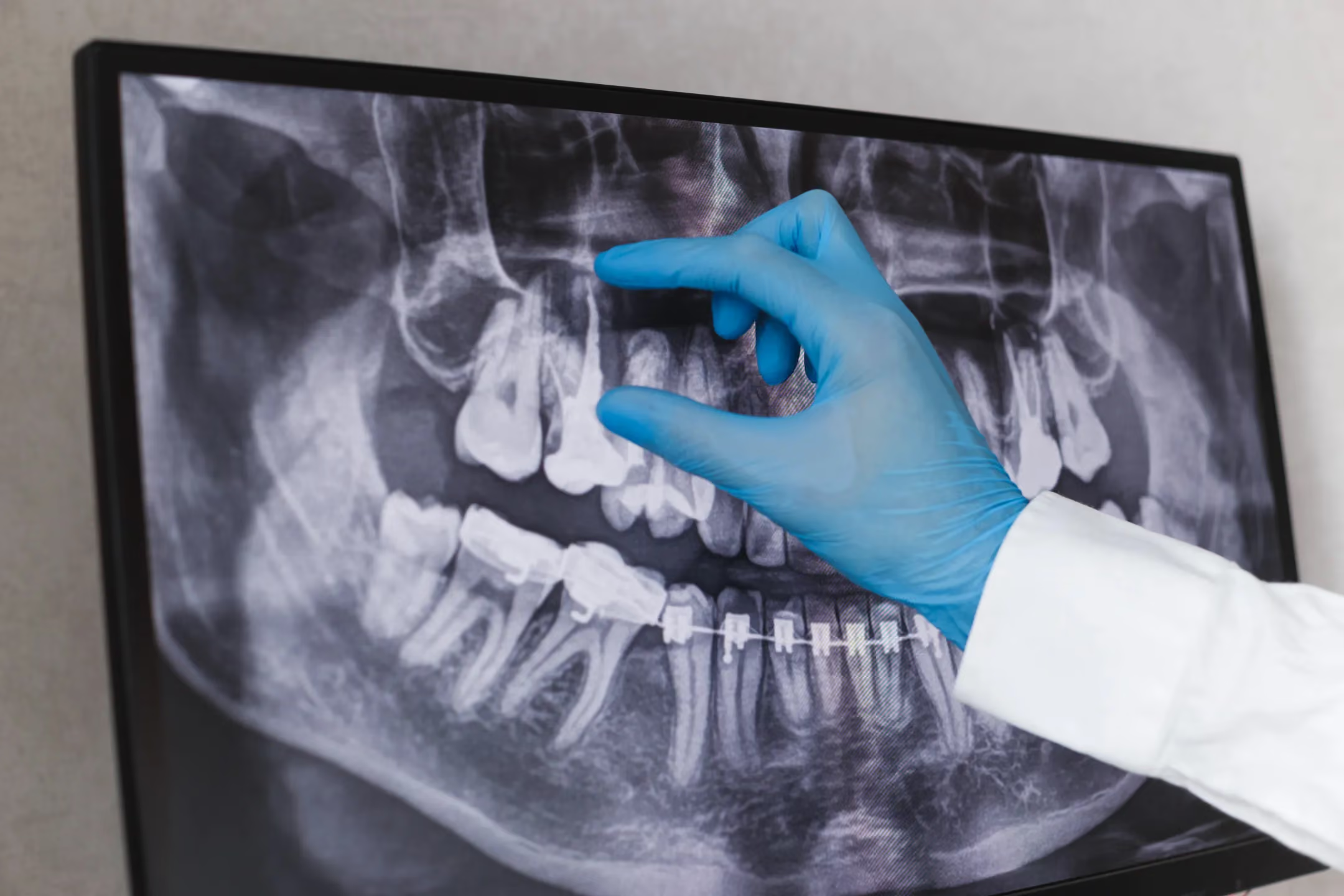
Your teeth don’t exist in isolation—they’re supported by bone. X-rays allow dentists to evaluate the health of that bone structure, which is crucial for detecting periodontal (gum) disease.

Bone loss doesn’t always come with obvious symptoms at first. However, through dental X-rays in Ewing, NJ, your dentist can measure bone levels and identify early changes. Catching this early can make a significant difference in preventing tooth loss and maintaining long-term oral health.

3. Impacted Teeth (Especially Wisdom Teeth)

Wisdom teeth are notorious for causing problems, but you may not even know there’s an issue until it’s visible on an X-ray. Impacted teeth—those that don’t fully erupt—can grow at awkward angles, press against neighboring teeth, or remain trapped under the gums.

Dentists at Ewing Dental Associates use X-rays to monitor the position and development of these teeth. This allows them to recommend timely intervention before complications arise, rather than reacting after pain begins.

4. Infections Below the Surface

Not all dental problems are visible above the gumline. Infections at the root of a tooth, often caused by untreated decay or trauma, can develop silently.

On an X-ray, these infections may appear as dark spots near the root tip. Identifying them early through dental X-rays, Ewing, NJ, can prevent the spread of infection and reduce the need for more invasive procedures later on.

5. Hidden Cysts or Abnormal Growths

Perhaps one of the most surprising things dentists can detect are cysts or other abnormal growths. These conditions often develop without noticeable symptoms in their early stages.

Through routine imaging like dental X-rays in Ewing, NJ, dentists can spot unusual patterns or changes in bone density that may indicate something more serious. Early detection is key—not just for treatment, but for peace of mind.

Why This Matters More Than You Think

It’s easy to think of dental X-rays as just another step in your appointment, but they are one of the most powerful tools your dentist has. They allow for proactive care rather than reactive treatment—catching issues before they escalate into pain, expense, or complex procedures.

At Ewing Dental Associates, every X-ray is carefully reviewed to ensure nothing goes unnoticed. Whether you’re coming in for a routine check-up or addressing a specific concern, tools like dental X-rays, Ewing, NJ, provide clarity, precision, and a deeper understanding of your oral health.

The next time you see your dental X-rays, remember—you’re looking at far more than just black and white images. You’re seeing a detailed map of your oral health, filled with insights that help protect your smile for years to come.

And while you might not be able to interpret them yourself, you can feel confident knowing that your dental team is using that information to give you the best care possible—every single visit.