Three Reasons Adults Actually Need Fluoride More Than They Realize
Enamel Does Not Grow Back
This is perhaps the most important thing to understand about adult dental health. Unlike bone, enamel has no living cells. Once it is worn away, the body cannot regenerate it. Every acid exposure, every abrasive brushing session, and every night of grinding takes a microscopic amount of enamel that the body cannot rebuild.
Over decades, that adds up to enamel that is measurably thinner, noticeably more sensitive, and significantly more vulnerable to decay. Fluoride treatments help slow this process by continuously reinforcing the enamel that remains, giving it a mineral boost that makes it harder for acid to penetrate.
Gum Recession Exposes the Most Vulnerable Part of the Tooth
As adults age, gum recession becomes increasingly common. It can be caused by gum disease, overly aggressive brushing, teeth grinding, or simply the natural changes that occur in the gum tissue over time. When the gums recede, the root surface of the tooth is exposed, and that changes everything from a cavity-risk standpoint.
The root surface is covered not by enamel but by cementum, a much softer and more porous material that is significantly more susceptible to decay. Root cavities can develop faster, go deeper, and be more difficult to treat than cavities on the crown of the tooth. Fluoride applied to exposed root surfaces provides critical protection that patients with gum recession genuinely cannot afford to skip.
Dry Mouth Is Extremely Common in Adults, and It Creates the Perfect Environment for Decay
Saliva is one of the most underappreciated protectors of oral health. It neutralizes acids, washes away food particles, and delivers minerals to the tooth surface throughout the day. When saliva production decreases, the mouth becomes a significantly more hospitable environment for the bacteria that cause decay.
Dry mouth in adults is often caused by prescription medications, and the list of medications that list dry mouth as a side effect is remarkably long. Antihistamines, antidepressants, blood pressure medications, diuretics, and dozens of other commonly prescribed drugs all reduce saliva flow to varying degrees. Adults who take any of these medications are at meaningfully elevated risk for tooth decay, and fluoride treatments become one of the most important tools in keeping that risk manageable.
What the Research Actually Says About Fluoride for Adults
The clinical evidence supporting fluoride use in adults is robust and consistent. The American Dental Association recommends professional fluoride treatments for any patient at moderate to high risk for cavities, and that category includes a very large proportion of the adult population.
Studies have shown that professional fluoride varnish, the type applied at dental hygiene visits, reduces cavities in adult patients by a clinically significant margin. For patients with gum recession, dry mouth, or a history of frequent cavities, the benefit is even more pronounced. This is not a treatment being applied out of habit. It is one of the most evidence-supported preventive interventions available in a dental hygiene setting.
What Happens When Adults Skip Fluoride Treatments
The consequences of skipping fluoride do not usually appear immediately. That is part of what makes this particular gap in care so easy to overlook. Decay that could have been caught and reversed at the remineralization stage instead progresses quietly, often without pain or visible signs, until it has advanced far enough to require a filling, a crown, or more significant intervention.
For patients with gum recession, a root cavity that develops in an unprotected area can progress surprisingly quickly and reach a depth that makes treatment considerably more involved than it would have been at an earlier stage.
The cost, the time, and the clinical complexity of treating decay that was allowed to progress are all significantly greater than the cost of the fluoride treatment that could have prevented it. At Ewing Dental Associates, the prevention-first approach exists precisely because addressing small problems early, or preventing them entirely, is always better than managing large ones later.
How Digital X-Rays and Fluoride Work Together at Ewing Dental Associates
One of the most powerful aspects of a comprehensive hygiene visit at Ewing Dental Associates is the combination of professional fluoride treatments and digital X-rays working together to give the team a complete picture of your oral health.
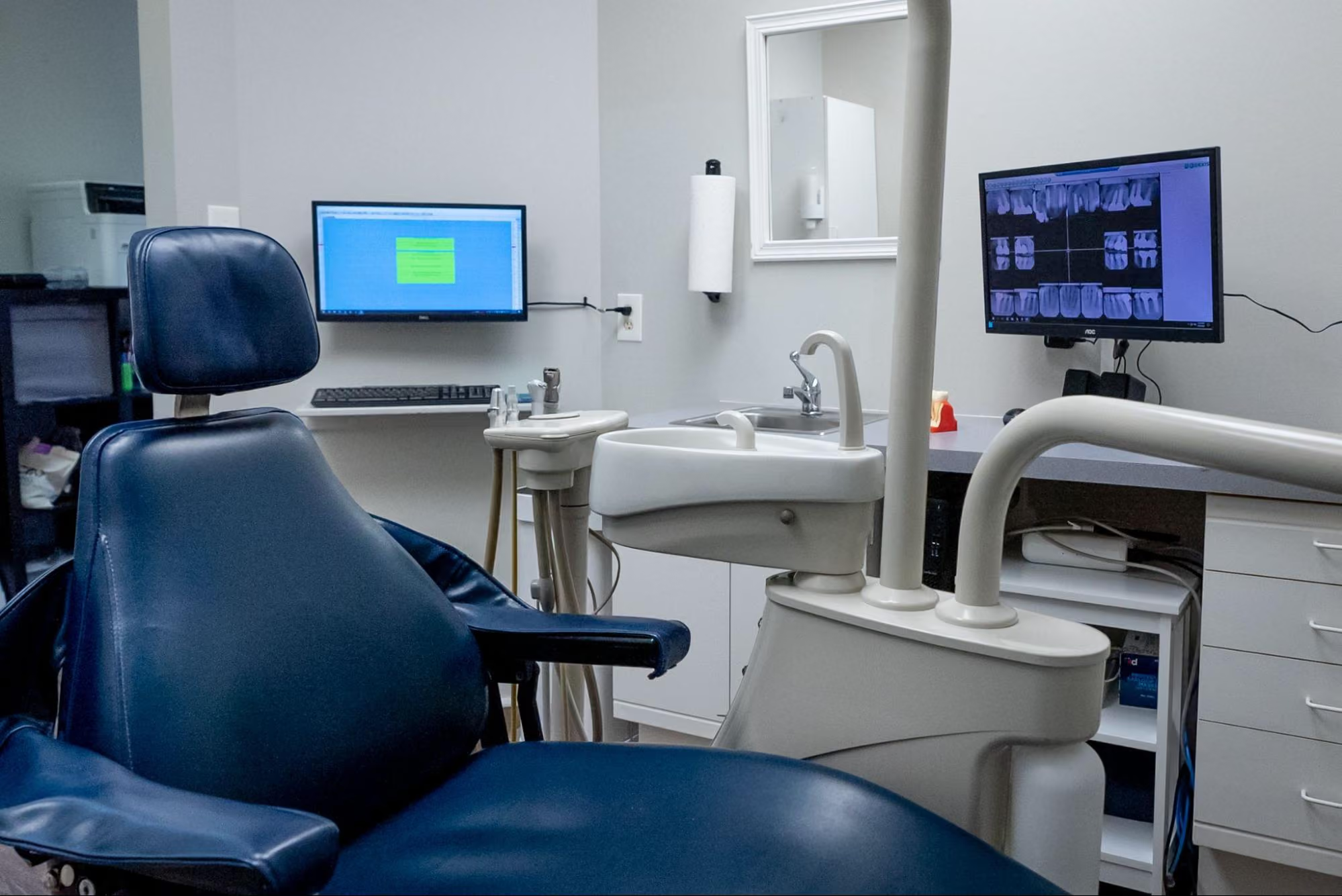
The Dental X-rays Ewing, NJ, patients receive at Ewing Dental Associates use advanced digital imaging technology that captures detailed images of the teeth and supporting bone with a fraction of the radiation exposure associated with traditional film X-rays. This matters because many of the conditions that make fluoride most necessary, including early interproximal decay between the teeth, early bone changes from gum disease, and areas of demineralization, are simply not visible to the naked eye or even to a careful clinical exam.
Digital X-rays reveal what is happening beneath the surface. They allow the hygiene team to identify patients who are showing early signs of decay or enamel weakness, and to tailor the fluoride treatment accordingly. For a patient whose X-rays show early signs of decay between the teeth, the case for fluoride becomes even more clinically compelling. For a patient whose bone levels and tooth surfaces look healthy, the fluoride treatment becomes a maintenance tool rather than a corrective one.
By combining the dental X-rays Ewing, NJ, patients trust with professional fluoride application, Ewing Dental Associates delivers preventive care that is genuinely proactive rather than reactive. You are not waiting for a problem to announce itself with pain or sensitivity. You are catching the earliest signs of vulnerability and addressing them before they become something more significant.
What a Fluoride Treatment at Ewing Dental Associates Actually Involves
Patients who have not had a professional fluoride treatment since childhood sometimes expect the foam tray experience they remember from the pediatric dentist. Modern professional fluoride is considerably more elegant than that.
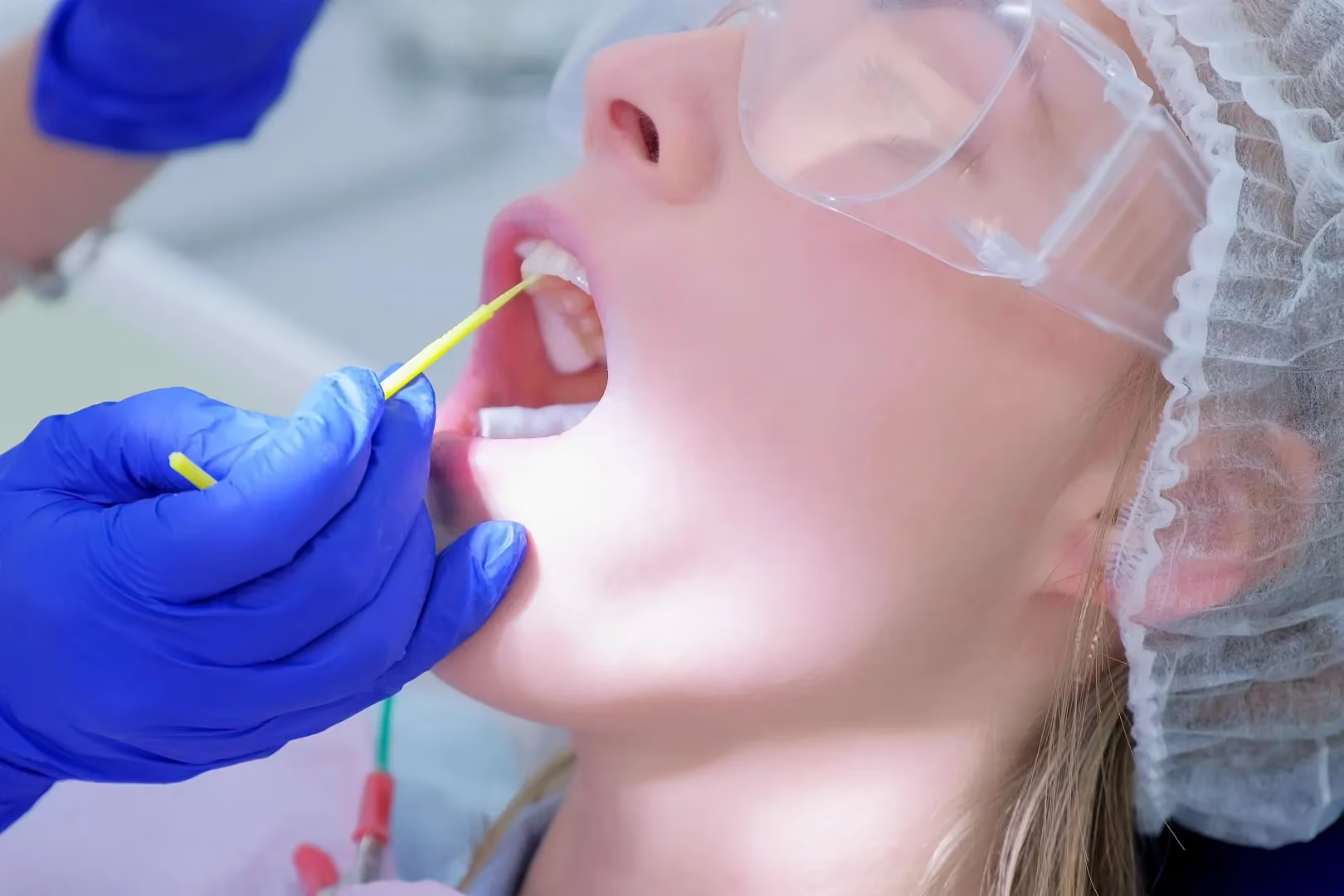
At Ewing Dental Associates, the fluoride treatments Ewing, NJ, patients receive are applied as a concentrated varnish, a thin coating brushed directly onto the tooth surfaces in a matter of seconds. It is completely comfortable, requires no trays or waiting periods, and patients can eat and drink within a short time after application. The varnish continues to release fluoride ions into the enamel for hours after application, delivering a sustained mineral boost that a brief rinse or over-the-counter treatment simply cannot replicate.
The entire addition to a hygiene visit takes only a few minutes. The protection it provides lasts for months. And for patients whose clinical picture includes any of the risk factors discussed above, those minutes are genuinely among the most valuable in the appointment.
The Ewing Dental Associates Approach: Prevention Without Pressure
What makes Ewing Dental Associates a different kind of practice is the clarity of its focus. This is a hygiene-only practice, which means every visit, every conversation, and every clinical decision is oriented entirely around keeping your teeth and gums as healthy as possible. There are no restorative procedures being scheduled, no upselling, and no pressure to add treatments that are not clinically appropriate.
When the team at Ewing Dental Associates recommends fluoride treatments in Ewing, NJ, for an adult patient, it is because the clinical evidence and the patient's individual risk profile support that recommendation. When dental X-rays Ewing, NJ, are suggested, it is because the imaging will provide information that directly improves the quality of the preventive care being delivered.
Every recommendation is explained. Every question is welcomed. And every patient leaves understanding exactly what was done, why it was done, and what they can do between visits to support their own oral health.
That is what prevention-focused dental hygiene care looks like when it is done at its best.
The Takeaway: Fluoride Is for Everyone With Teeth
The short version is this: if you have teeth, you need fluoride. The biology of enamel demineralization and remineralization does not change based on your age. The risk factors that make decay more likely, including gum recession, dry mouth, acidic diets, and medication use, are more common in adults than in children. And the consequences of untreated decay are more significant and more expensive to address with every passing year.
If you have been skipping fluoride treatments because you assumed they were a childhood necessity you had outgrown, this is a good time to revisit that assumption. One conversation with the team at Ewing Dental Associates is all it takes to understand where you stand and what your teeth actually need.